flight schedule analytics
get ahead of shifts in frequency and capacity
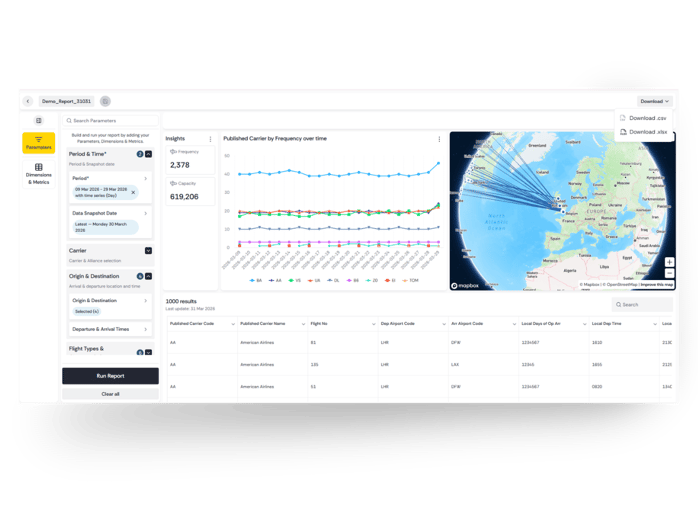
Understand how flight schedules have evolved over time, track where change is happening and uncover growth opportunities across routes and regions using Schedules Analyser.
WHY SCHEDULE INSIGHT MATTERS
Airline schedules change constantly as markets evolve and competition intensifies. Understanding where frequency and capacity are increasing or declining across routes and regions is critical to planning networks, benchmarking competitors and identifying new opportunities. Without clear visibility across time, these shifts are easy to miss.

UNDERSTAND CHANGE ACROSS CAPACITY, COMPETITION AND MARKETS
track & forecast capacity
Understand how flight frequency and capacity have evolved over time and forecast upcoming routes, markets and regions, using schedules data from 1996 to 12 months ahead.
benchmark routes & markets
Compare airline schedules across routes, carriers and regions to understand competitive positioning, identify gaps and uncover emerging opportunities.
visualize, report & decide
Turn complex schedules data into clear charts, maps and reports that support planning, stakeholder alignment and evidence-based decision making across your organisation.
FROM COMPLEX SCHEDULES TO CLEAR INSIGHT
Flight Schedule Analytics helps you move from global networks to single routes,
turning complex schedules data to clear, shareable insight, in just a few steps.
-
INSIGHT BUILDER
-
SNAPSHOTS
-
INTERACTIVE CHARTS
-
INSTANT EXPORTS
Build the view that matters
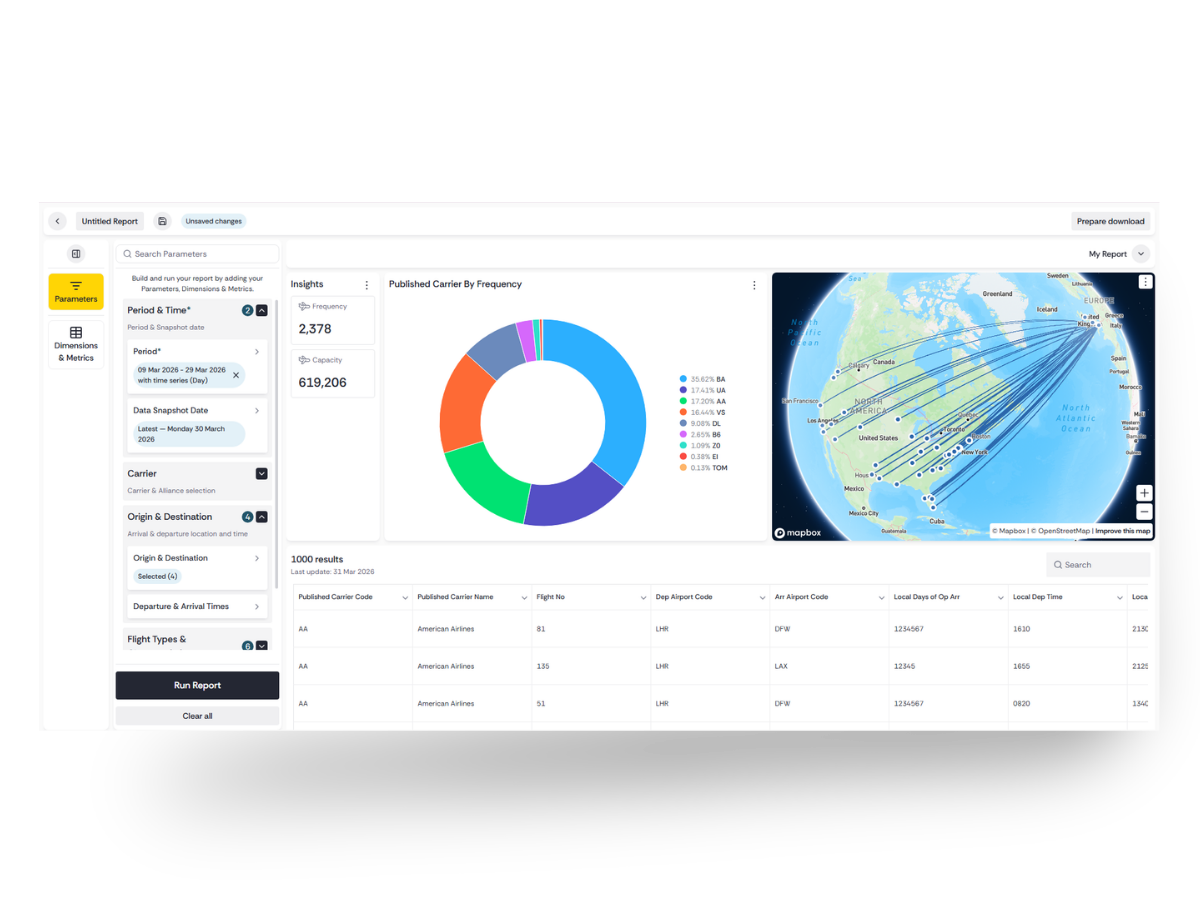
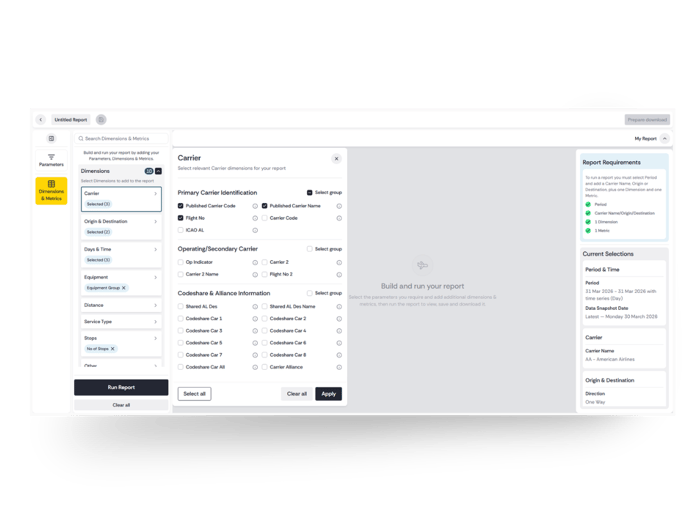
Start by tailoring your analysis to the routes, markets, carriers and time periods you care about. Use a flexible insight builder to select the exact dimensions and metrics you need, cutting through the noise and focusing on the insight that matters most, from global networks down to individual routes.
Compare change over time
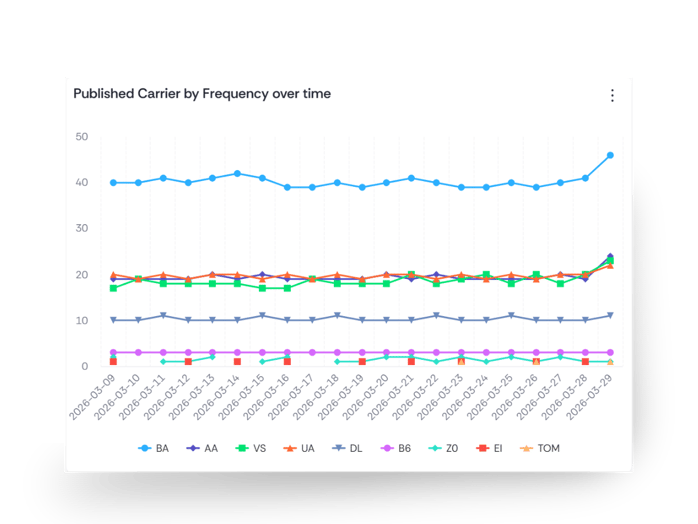
Compare frequency and capacity across past, present and future schedules in a single view to understand how markets have evolved and where meaningful shifts are taking place. Line up weeks, months or years to track capacity changes, benchmark competitors and focus on the periods that matter most.
Use snapshots to capture specific moments in time and apply flexible time ranges to exclude anomalies and surface clearer insight.
Visualize patterns and trends
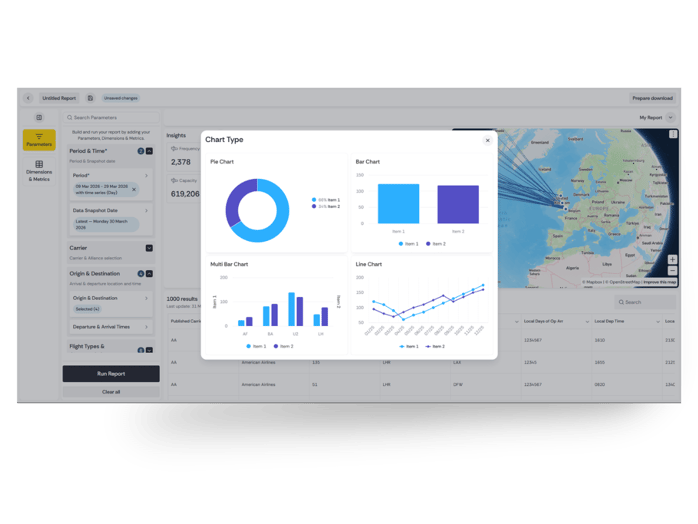
Bring your analysis to life with interactive charts that make patterns easy to spot and comparisons easy to explore. Click, filter and drill into data across charts, maps and tables to uncover trends in frequency and capacity across routes, regions and networks.
Visual comparisons help turn complex schedule changes into insight you can quickly understand and confidently explain.
Share, report, act
Export clean, ready-to-use data and visuals in one click to support planning discussions, stakeholder alignment and business cases. Move seamlessly from analysis to reporting, knowing your data is accurate, consistent and ready to share across your organisation.
BUILT FOR AVIATION TEAMS THAT NEED CLARITY
Flight Schedule Analytics supports teams across aviation who need clarity on how schedules are shifting,
and what those changes mean for planning, competition and growth.
airlines
Plan and optimise networks, understand competitive capacity moves and support confident commercial decisions.
airports & route development
Monitor airline behaviour, track connectivity changes and identify opportunities to grow air services and future routes.
consultants & analysts
Analyse long-term trends, benchmark markets and deliver clear, evidence-based insight to support strategic recommendations.
government, tourism & destination
Understand connectivity evolution, assess market performance and inform aviation and tourism development strategies.
WHERE SCHEDULE INSIGHT DRIVES ACTION
Flight Schedule Analytics is used to support some of the most critical planning and market decisions across aviation.
Together, these capabilities support the decisions that shape network planning, market development and competitive strategy.
Planning and forecasting capacity across networks and markets
Assessing route viability and identifying development opportunities
Monitoring competitors and tracking market shifts over time
Understanding how schedules evolve seasonally and year over year
Identifying growth opportunities across routes, regions and networks
Building clear, evidence-based business cases and stakeholder reports