
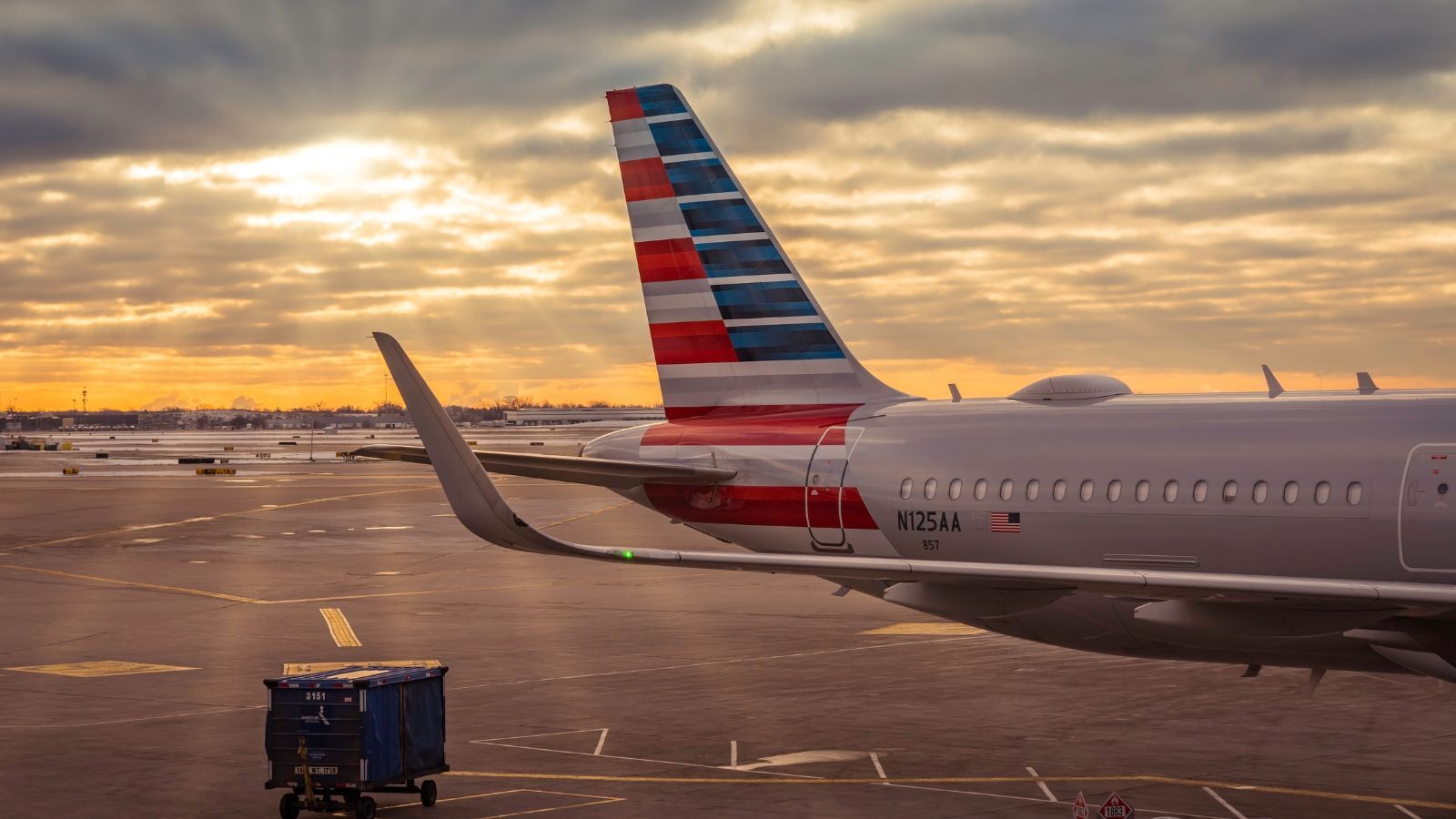
Chicago, specifically O’Hare International Airport, is a unique market. It is one of the few airports in the world that serves as a major hub for two airline alliances - Star Alliance and oneworld - and its location in the United States makes it an ideal connecting point for nearly all major traffic flows in North America.
For many years, Chicago O’Hare has been one of the major battlegrounds between American Airlines and United Airlines; United has always had a slight upper hand on its competitor, perhaps because of its locally based carrier position. However, for both airlines, O’Hare is just one of many hub airports operated in the US, all of which serve a specific set of traffic flows.
United: ORD, DEN, IAH, EWR, SFO, IAD, LAX
American: ORD, DFW, CLT, MIA, PHX, PHL, LAX
Balancing growth, defending competitor pressure and maximising fleet utilisation are constant challenges for both American and United. But did American under-invest in defending in Chicago, especially while United played a long, disciplined home-hub game?
American airlines: Balancing priorities
Life is about choices, and for airlines it’s about what markets to develop, when, and why. In the post-pandemic period, American Airlines made a series of strategic choices that focused its efforts elsewhere - as the chart below highlights.
Across American Airlines' ten largest markets in the United States, the frequency share at O’Hare fell to 10.6% in Summer 2023, from a previous high of 13.6% in Summer 2019 (the last pre-pandemic full summer season). Dallas Ft Worth, and Charlotte are clearly the two major focus markets for American, collectively accounting for over 40% of the airline’s frequency across those ten major airport markets.
Intriguingly, O’Hare has traditionally sat in third position, making the airport very important, but perhaps not quite important enough when other priorities or opportunities emerge. And of course, while Americans may have been pondering, many have suggested that United Airlines has been acting, although the data doesn’t quite support that assumption…
United Airlines: The stats behind the hype
United Airlines post-pandemic rebuild and subsequent strategic development in Chicago O’Hare have not been quite as significant as some believe. In Summer 2026, United will operate some 132,500 scheduled services from O’Hare, just under 1,000 more services than in Summer 2018 and a very modest 0.7% growth over an eight-year period, the equivalent of just four more scheduled flights a day. International frequencies for United are up by just 95 flights across the whole summer season.
Comparing American Airlines’ programme at O’Hare shows the airline increasing frequency in Summer 2026 by approx. 4,300 flights since Summer 2018, a growth rate of 4% - so nearly four times faster than that of United Airlines. Over 12% of Americans’ frequency growth against Summer 2018 is across international markets, with leisure destinations such as Cancun and Punta Cana seeing large increases, while new services to Mexico City and San Jose del Cabo add to the growth.
|
|
|
Much has been made of America’s recent rebuild in O’Hare, and certainly, Summer 2026 is a step up from the low point of Summer 2023. However, the airline added 17% more flights in Summer 2025 compared to the previous year, so this year’s growth of a further 13% looks part of a longer-term re-investment into the market.
Chicago is a very large market with Chicago Midway operating some 43,000 scheduled flights this summer, providing strong competition to the extensive network offered at O’Hare. There is certainly room for two major global airlines to operate major bases from the city - as has been proven over many years, and for travellers, that competition ensures competitive fares are always available.
Delta Air Lines: Two’s company, three’s a crowd
As American Airlines rebuilds its presence, although it could be argued it never really went away, is there now room at O’Hare for a third major carrier? Summer 2026 will see Delta Air Lines adding back some 780 flights, with a new non-stop service to Los Angeles and increased connectivity to Atlanta and Minneapolis-St Paul. Even so, this still leaves Delta Air Lines with 1,700 fewer flights than it operated in Summer 2018. Therefore, perhaps the key question is whether other, more interesting opportunities will emerge for Delta over time, particularly as both American and United Airlines continue their return to Summer 2018 capacity levels.